
Mint Jelly or Mint Sauce, and Which One You Actually Want
By Jodie Smith, Product & Hamper Manager at The Gourmet Pantry.
Mint jelly is set, sweet and cut with a spoon, so it sits beside the meat in its own small dish. Mint sauce is loose and pourable, sharp with vinegar or oil, and goes over the meat. Same herb, two different jobs on the plate.
They are not interchangeable, and only one of them travels well.
Mint jelly, mint sauce, mint jam
Mint jelly is a clear set jelly, traditionally built on apples for their pectin, with sugar, vinegar and mint through it. It is sweet before it is sharp, it holds the shape of a spoon, and it stays where it is put rather than running into the gravy. That is most of the reason it exists.
Mint sauce is thinner and louder: chopped mint steeped in vinegar with a little sugar, sharp enough to cut the fat on a shoulder, and poured over the meat rather than served beside it. Newer versions trade some of that vinegar for olive oil, which moves them closer to a salsa verde.
Mint jam is not a third product. Nearly everyone using the phrase means mint jelly. If you are working through our gourmet condiments looking for the jar that goes next to lamb, mint jelly is the one.
The two we stock, and how they differ
We carry one of each, and the difference is easiest to see side by side.
| The jar | Size and price | Texture | Where it goes |
|---|---|---|---|
| Officers' Mess Mint Jelly | 310g, $12.95 | Set, spoonable, cuts cleanly | Its own dish beside a carved roast |
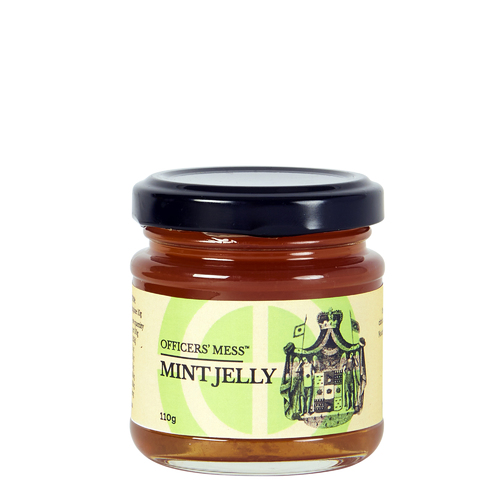
| Mint Jelly Mini | 110g, $6.95 | The same jelly, smaller jar | A table of two, or a gift |
| Glasseye Creek Forking Mint Sauce | 400g, $19.95 | Loose, pourable, rich with olive oil | Straight over hot cutlets |
The jelly comes from The Regimental Condiment Company, whose jars are named after regiments and aircraft. Officers' Mess is their preserve line, so the mint jelly sits with the conserves and the Seville orange marmalade rather than with the mustards and relishes. That tells you what to expect: a preserve that happens to be used savoury.
The sauce is a different proposition. Glasseye Creek is a New Zealand maker with a West Coast pub behind its first sauce, and the Forking Mint Sauce is loaded with extra virgin olive oil, which puts it closer to a mint salsa verde than to the vinegar sauce most people picture. At $19.95 it is the dearest single bottle in the range we stock.
If mint jelly reaches your table twice a year, the 110g mini at $6.95 is the honest jar.
Which one to buy for what you are cooking
The choice is not about quality. It is about what the meat is doing and how the table works.
- A whole leg or shoulder, carved at the table. Mint jelly, in a small bowl with its own spoon. Sauce poured over a carved platter ends up everywhere except where you aimed it.
- Cutlets or chops off the barbecue. Mint sauce, straight over the meat off the grill. An oil rich one behaves like a dressing, which suits pink lamb better than a sweet jelly does.
- Cold lamb the next day. Mint jelly, spread thinly in a sandwich with butter and something peppery. Cold meat turns it into a chutney.
- A cheese board. Mint jelly, beside a hard sheep's milk cheese or a young goat cheese, doing the job a quince paste does.
- A gift or a hamper. The jelly. A sealed jar travels better than a bottle, and reads as a present rather than an ingredient.
How much to put out, and what to do with the rest
A rounded teaspoon of jelly per person is plenty, so a 310g jar covers a large table with jelly to spare. A tablespoon of sauce per serve is closer to the mark, because it is doing a dressing's work. Give either one its own bowl and spoon, and keep them off the platter, where they mix into the resting juices and lose the point.
Cold jelly comes out of the jar in a lump. Stir it hard for a few seconds and it breaks into something spoonable that people will help themselves to. Sealed, it keeps in the cupboard until the date on the label; once open it lives in the fridge, and a dry spoon every time is the difference between a jar that lasts and one that grows a skin.
The rest of the jar has work in it. A spoonful stirred into the pan juices off the heat turns them glossy. A teaspoon whisked with olive oil and lemon makes a dressing for peas, broad beans or a warm potato salad. Mint jelly earns its place in a fridge door the way a mustard does, by being right for one job rather than adequate for all of them, and if the mustard shelf is the next gap we have set out four mustards and the jobs they are for.
Lamb at an Australian Christmas
Ham takes most of the attention in December, but a leg of lamb is a genuine Australian Christmas centrepiece, and it suits a barbecue on a hot day. We sell the jar, not the leg, which makes the planning simple: buy the condiments in October while the shelf is full, and the meat the week before. Our guide to Christmas side dishes covers the rest of the table, and mint jelly needs none of the oven space. If you are buying for somebody else's Christmas, our Christmas hampers cover the pantry half of the meal.
The jars worth buying early.
Christmas ordering reminders and new arrivals, one email when it matters. Unsubscribe any time.
Mint jelly questions we get asked
What is the difference between mint jelly and mint sauce?
Set against pourable, and beside the meat against over it. Mint jelly is cooked with sugar and pectin until it sets, so it holds its shape in a dish. Mint sauce is loose, built on vinegar or oil, and goes over hot meat like a dressing. The jelly is sweeter, the sauce is sharper.
What do you serve mint jelly with besides lamb?
Cheese first: a hard sheep's milk cheese, a young goat cheese or feta, where it does the job a quince paste does. After that, cold roast meat in a sandwich, roast chicken, pork, and anything with peas in it. A teaspoon whisked into an olive oil and lemon dressing is the quietest use.
Does mint jelly need to be refrigerated?
Not until it is opened. Sugar and vinegar make a sealed jar shelf stable, so it waits in the cupboard until the date printed on it. Once the seal is broken it belongs in the fridge with the lid wiped clean, and the storage line on the label beats any general rule.
Can you use mint jelly in a glaze?
Yes, as long as you add it late. Melt two or three tablespoons with a splash of vinegar or lemon juice, then brush it over lamb in the last ten to fifteen minutes of roasting. It is mostly sugar, so it catches and blackens quickly if it goes on at the start. On the barbecue, glaze on the cooler side.
Is mint jelly the same as mint jam?
In practice, yes. A jelly is strained so it sets clear, while a jam usually keeps pieces of fruit in it, and there is no real tradition of a mint jam as a separate product. A label saying mint jam is almost always the same clear set jelly.
Which jar to add to the order
If lamb is being carved at your table, buy the Officers' Mess mint jelly at $12.95 for 310g, or the 110g mini at $6.95 if it only comes out on the big days. If it is going on the barbecue as cutlets, buy the Glasseye Creek Forking Mint Sauce and treat it as a dressing. Both sit with the rest of our gourmet condiments, and shipping is free Australia-wide on orders over $100. Orders placed before 12pm on a weekday are dispatched the same day from our Corio, VIC warehouse, tracked with Australia Post.
TRCC Mint Jelly Mini 110g
$6.95
Hand-packed and dispatched from our Corio, Victoria warehouse, with free delivery Australia-wide on orders over $100.
More from the blog.

Gingerbread Biscuits and Gingerbread Spice: A Christmas Guide
The spice mix behind gingerbread, a blend you can make tonight, why some biscuits snap and others stay soft, and the gingerbread worth buying when you would rat
Read now
Vol au Vent Fillings: 12 Ideas for Christmas
Classic chicken and mushroom, curried egg, prawn, smoked salmon and a few sweet ones. Twelve vol au vent fillings, how many to make per guest, and how to stop t
Read nowChristmas Shortbread: Types, Tins and Millionaire's Shortbread
Butter, sugar and flour, and very little else. Why shortbread belongs at Christmas, how to tell a good one, the tins worth giving, and how to make millionaire&#
Read now