
The Ploughman's Lunch, Rebuilt for an Australian Christmas
By Emily Patrikakos, Brand Executive at The Gourmet Pantry.
A ploughman's lunch is a cold plate of bread, cheese and pickle with cold meat beside it, plus something sharp and something fresh. Nothing on it is cooked. That is why it survives an Australian Christmas better than any other plate England sent us: you build it from the cupboard and the fridge, and the oven stays off.

Almost everything Britain handed us for Christmas arrives needing heat. Roast turkey, baked ham, a pudding steamed for hours. The ploughman's is the one inherited plate that asks for none of it. It is bread, cheese, cold meat and a jar, laid out at room temperature, and most of it can be bought weeks early and left in a cupboard. That is the half of the shopping we can help with: the relish, the mustard, the olives and the crackers that sit in festive entertaining essentials. The cheese, the ham and the loaf come from your deli, butcher and baker, and always will.
Why the ploughman's suits an Australian December
A roast sets the clock for the whole day. A ploughman's has no clock. There is nothing to time, nothing to rest and nothing to carve at the moment everyone sits down, so the cook eats at the same temperature and the same time as everybody else.
It also scales sideways. Two more people means two more plates, not a bigger oven. Guests who turn up late get exactly what the early ones got, because it was never hot to begin with. When lunch is over the parts go back to being what they were, a wedge of cheddar, half a jar of relish and a packet of crackers, all still good on Boxing Day. Very little of a ploughman's ends up in the bin, which is not something you can say about a roast.
The vegetarian version is not a separate project either. Leave the meat off, add a second cheese and a hard boiled egg, and the plate is finished. Nobody cooks twice.
It is worth saying where in the week this plate really belongs. Christmas Day is usually spoken for. Boxing Day is not, and by then the ham is already cut, the cheese has been out of its wrapper once and nobody wants to see an oven. A ploughman's is what that food wants to become. The same is true of Christmas Eve, when the kitchen is needed for tomorrow and lunch has to happen somewhere else.
What is actually on a ploughman's lunch
There is no fixed recipe, which is the appeal. The plate settled into six parts, and it holds together as long as each one is present.
- Cheese. A sharp cheddar is the traditional answer. One large wedge beats three small ones on a plate this plain.
- Bread or crackers. A crusty loaf in England. In a hot December, crackers hold up better on a table left out for two hours.
- Cold meat. Ham off the bone, or cold roast pork. Christmas leftovers walk straight into this slot.
- Pickle or relish. The sweet and sour jar that cuts the fat of the cheese. The one part of the plate with a real buying decision behind it.
- Something sharp. Pickled onions, hot English mustard, olives. One is enough and two is generous.
- Something fresh. Apple wedges, celery, a handful of leaves. It stops the plate feeling heavy in the heat.
The plate is older than its name. British pubs were serving bread, cheese and pickle long before the words ploughman's lunch were pushed onto menus by the cheese trade in the 1960s. What that campaign fixed in place was the cheddar, the pickle and the pint, which is the version most of us picture.
How much to put out per person
As a whole lunch rather than a nibble before something else, allow each adult about 100 g of cheese, 80 g to 100 g of cold meat, five or six crackers or two slices of bread, a heaped tablespoon of relish and a few olives. If the ploughman's is sharing the table with a full Christmas spread, halve the cheese and the meat. Our numbers for a board that has to compete with everything else are in how much cheese per person, and if the ham is the centre of the day, what to serve with Christmas ham covers the rest of the table.
The two ploughman's relishes, and which one to buy
Two jars in our range carry the ploughman's name, and they are not the same product at two prices. Enough people assume they are that it is worth setting them side by side.
| VPC Ploughmans Relish | Bill's Ploughman's | |
|---|---|---|
| Size and price | 270 g, $7.95 | 360 g, $16.95 |
| Roughly per 100 g | $2.95 | $4.70 |
| Maker | Valley Produce Company | Tasmanian Gourmet Kitchen |
| How it is described | A traditional relish, made for a ploughman's platter | A chunky chutney, tangy with a little heat behind it |
| Where it earns its place | A long board, a full table, a hamper you are filling | One jar on a small plate where the cheese is the point |
The Valley Produce Company ploughman's relish is the everyday jar. At a heaped tablespoon each it takes a table of eight through lunch with a third of the jar still there, and at that price you can put a spoon in it without watching the level. It is the one to buy if you are feeding a crowd or building a hamper around it.
Bill's Ploughman's from Tasmanian Gourmet Kitchen is a different proposition. It is chunkier, tangier and has a low warmth running under it, and the extra nine dollars buys texture rather than volume. Put it on a plate for four with one very good cheddar and it is the thing people ask about. Put it on a table of twenty and half the jar goes past unnoticed.
One sentence, if you want it: the $7.95 jar is the relish you serve, and the $16.95 jar is the relish you show.
The sharp corner of the plate
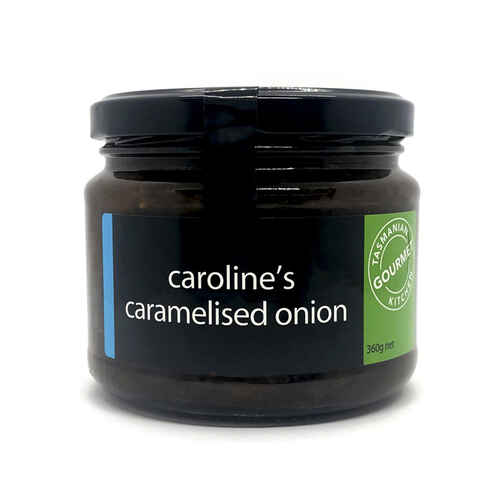
Pickled onions are the classic third element and we do not stock them, so that is a greengrocer or supermarket job. What we do stock is the jar that plays the same part from the other direction. Caroline's Caramelised Onions are soft and sweet where a pickled onion is sharp and squeaky, and they suit the guests who have never once finished a whole pickled onion.
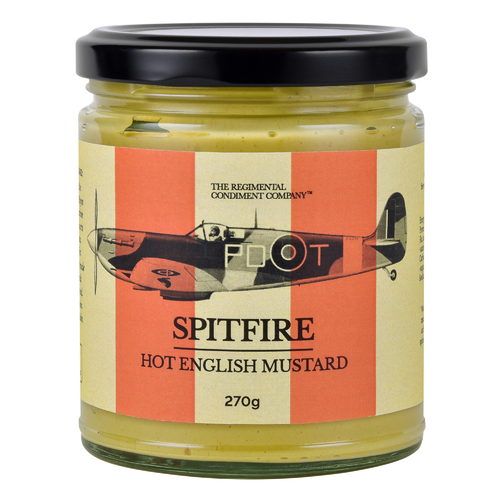
Mustard is the other sharp option, and on cheddar and ham the correct one is hot English. Spitfire hot English mustard is built for exactly this, served as a scrape rather than a spoonful. If it is only coming out once, the 110 g mini at $6.95 is the sensible size. We set out which mustard belongs where in our guide to four mustards and what they are for.
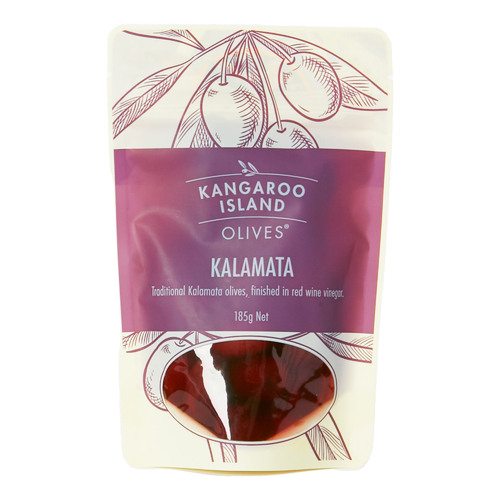
Olives finish the corner. Kangaroo Island kalamata olives, 185 g at $7.95, are Australian grown and one drained jar fills a bowl for four to six. Brine keeps them, so this is another October purchase.
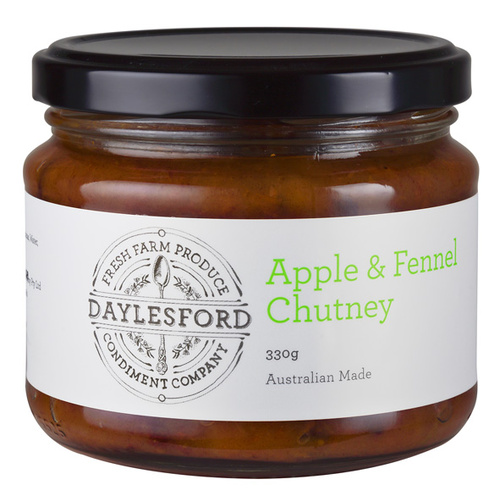
An apple and fennel chutney is worth knowing about too. If the plate has pork on it rather than ham, it does the relish job better than a relish does.
Crackers do the loaf's job better in the heat
Bread is correct and bread is also the first thing to fail. Sliced two hours before lunch and left on a board in December, it goes leathery at the edges while everyone is still outside. Crackers do not have that problem, which is why the Australian version of this plate quietly became a cracker plate.
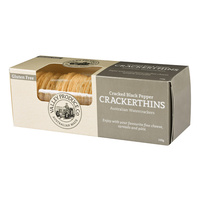
Cracked black pepper Crackerthins at $3.49 are the pick here, because pepper and cheddar are already a pair and the thin, brittle style carries a heavy load of cheese and relish without turning soft. Buy a packet for every two or three people: on this plate the cracker is the plate, not a garnish. There are gluten free versions at the same price, so one guest does not need a separate shopping trip. The full range sits under crackers, and which style goes with which cheese is its own question, answered in which cracker goes with which cheese.
Build it in this order
- October or November. Buy the shelf stable half: relish, mustard, olives, crackers, fruit paste. None of it needs a fridge and none of it improves by being bought in the last week of December.
- Two or three days out. Cheese from the deli. Buy it early rather than late, because it wants time out of the cold.
- The day before. Ham, bread, apples, celery.
- One hour before. Cheese out of the fridge. Cold cheddar tastes of very little.
- Ten minutes before. Open the jars, tip the olives into a bowl, and cut the apple last with a squeeze of lemon over it so it does not brown while people find a seat.
The traditional drink is a pint of ale or a dry cider, both of which suit salty cheese better than wine does. A cold beer and a plate of cheddar is the whole idea, and our craft beer hampers are built on the same logic. Adults only, and enjoy responsibly.
Questions about the ploughman's lunch
What is a ploughman's lunch?
A cold pub plate of bread or crackers, a wedge of cheese, cold meat, a pickle or relish, something sharp such as onion or mustard, and something fresh such as apple or celery. Nothing is cooked and nothing is served hot. It comes from British pubs, and the name was fixed in place by the cheese trade in the 1960s rather than by any actual ploughman.
What goes on a ploughman's platter?
The same six parts, spread out for a group instead of plated for one. One large wedge of cheddar, ham or cold roast pork, crackers and bread, a jar of ploughman's relish, a bowl of olives, hot English mustard, apple wedges and celery. A fruit paste is a fair addition if you want a second sweet note beside the cheese.
What is ploughman's relish?
A sweet and sour preserve of chopped vegetables or fruit cooked down with vinegar and sugar, sitting somewhere between a pickle and a chutney and made to cut through cheddar. Australian labels use relish and chutney for much the same thing. The 270 g Valley Produce Company jar at $7.95 is the everyday version; Bill's Ploughman's, 360 g at $16.95, is chunkier and carries more spice.
How much food do I need per person for a ploughman's board?
For a full lunch, about 100 g of cheese, 80 g to 100 g of cold meat, five or six crackers, a heaped tablespoon of relish and a few olives each. As a grazing board beside other food, halve the cheese and meat. One 270 g jar of relish covers eight people, and a 185 g jar of olives fills one bowl for four to six.
Can you make a ploughman's lunch ahead of time?
Most of it, yes. Jars, mustard, olives and crackers can be bought months ahead and need no fridge. Cheese and meat can be cut and covered a few hours before. Only two things want the last minute: the apple, which browns, and the bread, which stales. The cheese genuinely improves for coming out of the fridge an hour early.
Buy the shelf stable half now and the plate is finished before December starts. The jars, crackers and olives are all in festive entertaining essentials, and if you would rather hand the whole thing over as a gift, our Christmas hampers arrive packed. Shipping is free Australia wide on orders over $100, and orders placed before 12pm on a weekday are dispatched the same day from our Corio, VIC warehouse, tracked with Australia Post.
Christmas ideas, before the rush.
Christmas ordering reminders and new arrivals, one email when it matters. Unsubscribe any time.
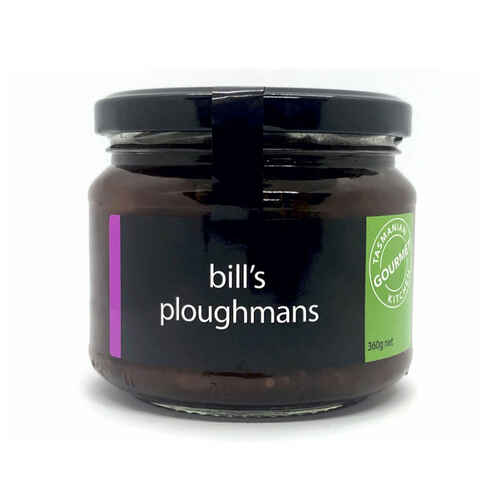
TGK Bill's Ploughman's (360g)
$16.95
Hand-packed and dispatched from our Corio, Victoria warehouse, with free delivery Australia-wide on orders over $100.
More from the blog.
Gingerbread Biscuits and Gingerbread Spice: A Christmas Guide
The spice mix behind gingerbread, a blend you can make tonight, why some biscuits snap and others stay soft, and the gingerbread worth buying when you would rat
Read now
Vol au Vent Fillings: 12 Ideas for Christmas
Classic chicken and mushroom, curried egg, prawn, smoked salmon and a few sweet ones. Twelve vol au vent fillings, how many to make per guest, and how to stop t
Read nowChristmas Shortbread: Types, Tins and Millionaire's Shortbread
Butter, sugar and flour, and very little else. Why shortbread belongs at Christmas, how to tell a good one, the tins worth giving, and how to make millionaire&#
Read now