
Balsamic Vinegar of Modena: What Density Means and How to Choose
Two bottles of balsamic vinegar can sit side by side on a shelf, one at $6 and one at $50, both saying Modena. They are not the same product. One is a thin, sharp dressing vinegar. The other pours like syrup and tastes of figs, caramel and wood.
Here is how to read the label, and what density has to do with it.
The three kinds of balsamic
Balsamic Vinegar of Modena IGP. The everyday kind, and what most people mean by balsamic. It is made from cooked grape must blended with wine vinegar, and aged in wood for at least 60 days. Labelled invecchiato (aged), it has spent at least three years in wood. Quality varies enormously within this category, which is where density helps.
Traditional Balsamic Vinegar of Modena DOP. Aceto Balsamico Tradizionale. Made from cooked grape must only, with no wine vinegar, and aged for at least 12 years through a series of ever-smaller wooden barrels. It is sold in small bottles, used by the drop, and very expensive.
Balsamic glaze and condiments. Balsamic reduced or thickened, sometimes with added sugar or starch. Useful, but a different thing.
What density means
Density is a measure of how heavy the vinegar is compared with water, which has a density of 1.00. More cooked grape must and longer ageing make a balsamic thicker, sweeter and heavier, so the number goes up.
- Around 1.06 to 1.15. Thin and sharp. Good in a vinaigrette.
- Around 1.20 to 1.29. Rounder and sweeter. An all-rounder.
- 1.30 and above. Thick, glossy and syrupy. A finishing balsamic, for drizzling rather than dressing.
Not every bottle prints its density. When one does, it is usually a producer confident in what is inside.
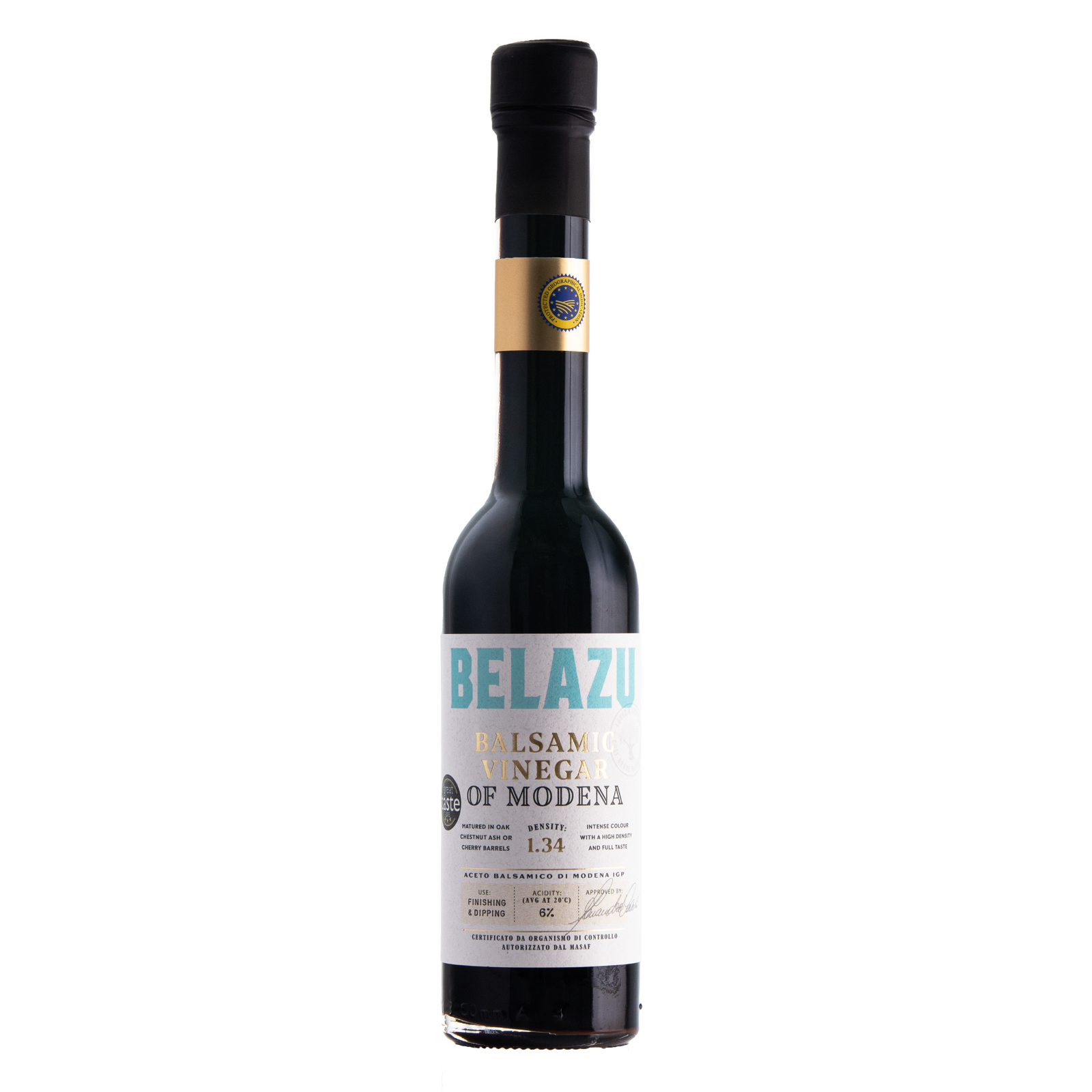
Belazu Balsamic Vinegar of Modena, density 1.34
Belazu Balsamic Vinegar of Modena sits at density 1.34, at the thick end of the scale. It is sticky and sweet, it has won 3 Great Taste stars, and it is the kind of balsamic chefs use to finish a plate.
Because it is so concentrated, a 250ml bottle goes a long way. You use it a teaspoon at a time.
How to use a thick balsamic
- Parmesan. Chunks of aged parmesan with a few drops of balsamic. One of the great Italian pairings, and a five-second addition to a cheese board.
- Strawberries. Halved strawberries, a little sugar, a few drops of balsamic and black pepper. Leave for 15 minutes.
- Vanilla ice cream. Sounds odd, tastes like caramel.
- Tomatoes and burrata. Drizzled over the plate with good olive oil and salt.
- Steak and roast meat. A few drops over sliced steak or roast lamb just before serving.
- Roast vegetables. Over pumpkin, beetroot or Brussels sprouts as they come out of the oven.
Do not cook a high-density balsamic hard. Heat drives off the aroma that you paid for. Add it at the end.
Other balsamic to try
For dressing salads and warm meats, TRCC Caramelised Classic Balsamic is rich, thick and sticky, and very good over rare roast beef or duck. For cooking, the Belazu Flavour Hack Balsamic Sundried Tomato Paste puts balsamic and tomato into pasta sauces and stews in one spoonful.
Balsamic and olive oil
A good balsamic needs a good olive oil beside it, whether in a dressing or a dipping plate. Belazu Early Harvest Extra Virgin Olive Oil is green and peppery, and Belazu Crete Gold is softer and fruitier. For a simple dressing, use three parts oil to one part balsamic, with salt and a little Dijon mustard.
How to store balsamic
Balsamic vinegar keeps for years. Store it sealed, at room temperature and out of direct sun. There is no need to refrigerate it. Thick, aged balsamic can crystallise a little over time, which is harmless.
Balsamic at Christmas
A bottle of good balsamic is a generous gift for anyone who cooks, and it is one of the easiest ways to lift a Christmas table. Drizzle it over a platter of tomatoes and burrata, or over the parmesan on a Christmas cheese board. More ideas in salads for Christmas.
Shop our olive oil and vinegars and the full Belazu range.
More from the blog.

Gingerbread Biscuits and Gingerbread Spice: A Christmas Guide
The spice mix behind gingerbread, a blend you can make tonight, why some biscuits snap and others stay soft, and the gingerbread worth buying when you would rat
Read now
Vol au Vent Fillings: 12 Ideas for Christmas
Classic chicken and mushroom, curried egg, prawn, smoked salmon and a few sweet ones. Twelve vol au vent fillings, how many to make per guest, and how to stop t
Read nowChristmas Shortbread: Types, Tins and Millionaire's Shortbread
Butter, sugar and flour, and very little else. Why shortbread belongs at Christmas, how to tell a good one, the tins worth giving, and how to make millionaire&#
Read now