
What Are Bon Bons? The Australian Christmas Cracker, Explained
By Emily Patrikakos, Brand Executive at The Gourmet Pantry.
In Australia, a bon bon is a Christmas cracker: a foil or card tube that two people pull apart so it snaps open and drops out a paper hat, a joke and a small gift. In most of the world, a bonbon is a chocolate. Australia kept both meanings, which is why the word confuses people in December.
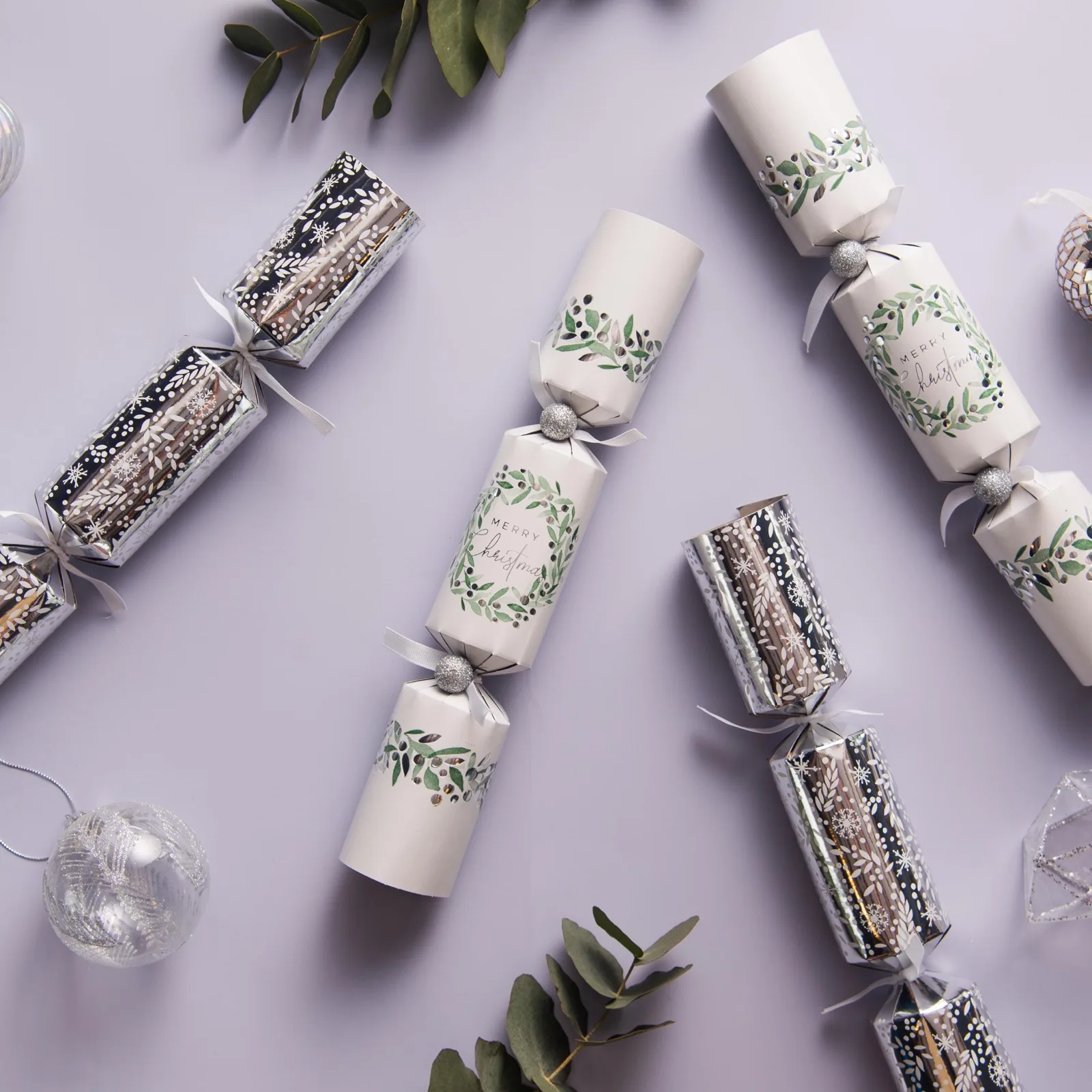
The two things we call a bon bon
Our own shelves carry both, which is a fair sign the confusion is real. The Christmas bon bons range is a wall of handcrafted crackers, the sort you pull at the table. Over in confectionery, the Chocolatier Christmas Milk Stars Bon Bon is the other kind entirely: solid milk chocolate stars in gold festive foil, 55g, nothing to pull and no bang.
Context sorts it out almost every time. If someone asks you to bring bon bons to Christmas lunch, they mean crackers, and they are picturing the table. If the word turns up on a chocolate box, a dessert menu or a recipe, usually spelled bonbon as one word, it means a small filled sweet. Same word, two jobs, and Australians move between them without thinking about it.
The spelling wanders as well. Bon bon, bon-bon and bonbon all turn up here and none of them is wrong. As a rough guide, two words leans towards the cracker and one word leans towards the chocolate, though plenty of packaging ignores that completely.
Why Australians call Christmas crackers bon bons
The short version: the sweet came first, and the name stayed with the wrapper.
The Christmas cracker was the idea of a London confectioner named Tom Smith in the 1840s. On a trip to Paris he saw sugared almonds sold in a twist of tissue paper, which the French called bonbons, and he brought the format home. It sold well at Christmas and poorly the rest of the year, so he kept adding to it: first a printed motto tucked inside, then the snap, then a small trinket in place of the sweet. His sons later added the paper hats and went looking for better gifts to put in.
Britain ended up naming the thing after the noise it made. Australia and New Zealand kept the name of the sweet that used to be inside. That is the whole story, and it is the answer to what Christmas crackers are called in Australia: bon bons. Both names are correct here, and most families use them interchangeably, sometimes in the same sentence.
What is inside a Christmas bon bon
A proper one holds four things.
- The snap. Two strips of treated card that drag past each other as the tube tears, which is what makes the bang.
- A paper hat. Folded tissue, crown shaped, sized to fit almost nobody.
- A joke or motto. Traditionally terrible. That is rather the point.
- The gift. This is the one that decides whether anything survives past lunch.
The gift is where the money goes. Mistletoe & Merry, the brand behind most of our range, handcrafts its crackers in South Africa and puts one quality gift in each. Crackertoa Traditional comes six to a tray at roughly 33cm a cracker, while the Games Paper Planes tray swaps that gift for paper plane materials, which buys you a quiet twenty minutes after lunch. If your table is small, or already crowded with food, the Petite Mini Nutcrackers run about 18cm and still carry all four parts.
Buy one per seat and two spare, because someone always turns up late. Trays come in sixes and twelves, single crackers start at $6.95, and they sit with the rest of the festive entertaining essentials if you are pulling the whole table together in one order.
One practical note. Pull them before the food lands, not after. Paper hats, torn card and gift wrap on a table of hot plates is how a crown ends up in the gravy, and how the gifts get thrown out with the wrapping.
Get the Christmas table sorted early.
Recipes, new arrivals and gourmet gifting ideas from The Gourmet Pantry. No spam, unsubscribe any time.
Bon bon questions we get asked
Why are Christmas crackers called bon bons in Australia?
Because the original was a sweet. Tom Smith wrapped French sugared almonds, or bonbons, in twists of tissue paper in the 1840s and sold them at Christmas. The sweet was eventually replaced by a hat, a joke and a small gift, but here the old name stayed attached to the object. Britain went with cracker instead, after the snap.
Are bon bons and Christmas crackers the same thing?
In Australia, yes. Bon bon, Christmas cracker and Christmas bon bon all describe one item: a pull-apart tube with a snap, a paper hat, a joke and a gift inside. You will see all three names on shelves and on packaging here, often for the same product. Outside Australia and New Zealand, ask for a cracker and you will be understood.
What is inside a Christmas bon bon?
A paper hat, a joke or motto, the card snap strips that make the bang, and one gift. The gift is the variable. Cheap boxes tend towards plastic novelties nobody keeps, while handcrafted trays hold something you might, such as a keyring, a bottle opener or a game the table can play together.
What is a chocolate bon bon?
A small filled or moulded chocolate, usually spelled bonbon as one word. It comes from the French for sweet and it is what most of the world means by the term. The Chocolatier Christmas Milk Stars Bon Bon is where the two meanings meet in Australia: chocolate, sold as a bon bon, wrapped for Christmas.
If you are setting your own table this December, start with the Christmas bon bons range and choose the tray by what you want still sitting on the table afterwards. If you are sending Christmas to someone else's table, the Christmas hampers do that job instead, hand-packed by our team in Corio, Victoria. Free Australia-wide shipping on orders over $100.
More from the blog.
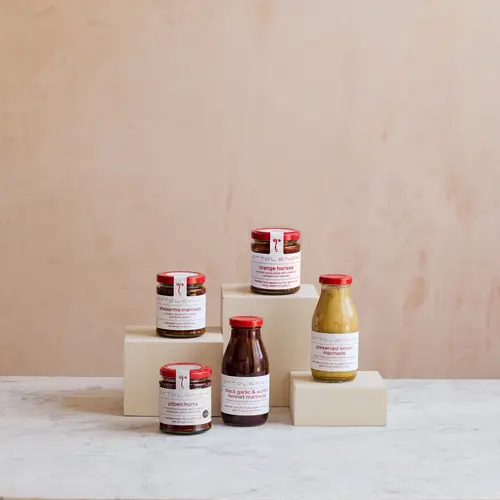
3 Ottolenghi Marinades for a Father's Day BBQ
Three Ottolenghi marinades for Dad's barbecue this Father's Day, each doing something different on the grill.
Read now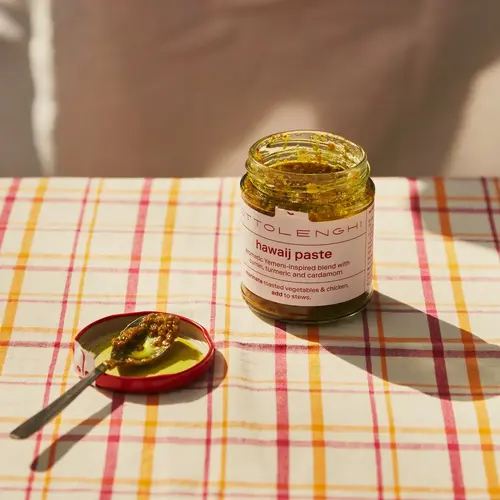
8 Creative Ways to Use Ottolenghi Hawaij Paste
A Yemeni spice paste of ginger, cardamom and turmeric, ready to use in soups, roasts, marinades and more. Eight ways to get more out of the jar.
Read now
The Gourmet Father's Day Gift Guide
Skip the tie and socks. A gourmet Father's Day gift guide covering BBQ spice tubes, wine and gourmet hampers, kitchen gadgets and Jen's biscuits, for wh
Read now