
Ottolenghi Yuzu, Ginger and Miso Marinade: What to Put It On
By Jodie Smith, Product & Hamper Manager at The Gourmet Pantry.
Put it on salmon, prawns, chicken thighs, pork belly, green beans and roast pumpkin. Ottolenghi Yuzu, Ginger and Miso Marinade is sweet, salty and citrus sharp, so it suits anything that takes a glaze. Brush it on, give fish half an hour and chicken a few, then cook at a moderate heat so the miso does not catch.
Ottolenghi Yuzu, Ginger and Miso Marinade is a 270g jar at $22.95. Thick enough to cling to a fillet, loose enough to thin into a dressing, and the jar to reach for when you want brightness rather than heat.
Three ingredients doing three jobs
Yuzu is the sour. It is a Japanese citrus that smells like mandarin, grapefruit and lime at once, sharper and more floral than any of them, and it carries further through a hot pan than lemon does. Miso is the salt and the savoury weight, a fermented soybean paste that browns beautifully. Ginger is the lift at the back that stops it tasting like a sweet glaze.
Sweet, salty and sour in one spoon is why it works on fish and on vegetables unchanged. Most marinades push in one direction and need something else alongside to balance them. This one arrives balanced, so it wants no added salt and little beyond a squeeze of lime.
We taste everything we range, and the note everyone made about this jar was how little you need. Ottolenghi's own green bean recipe uses 40g against 350g of beans, roughly two tablespoons, so a jar holds six or seven dinners.
Nine things to put it on
- Salmon fillets. Brush, rest 30 minutes, roast at 200°C for 10 to 12 minutes on baking paper. The surface lacquers while the middle stays translucent.
- Prawns. Fifteen minutes is enough. Grill hot and fast, then spoon over the marinade you set aside before the raw prawns went near it.
- Chicken thighs, skin on. Two hours or overnight, then 200°C for 35 to 40 minutes. The skin goes glassy and dark at the edges.
- Pork belly strips. Ottolenghi's own suggestion. Cook slow at 160°C until tender, brush again, then finish hot for colour.
- Green beans. Fried hard, then tossed off the heat with the marinade, coriander and a toasted sesame crumb. Our fried green beans with yuzu, ginger and miso has the full method.
- Roast pumpkin, carrots and cauliflower. Toss it through halfway, not at the start, so the edges caramelise instead of steaming.
- Tofu and aubergine. Brush the cut faces and grill. Both are sponges and both need the salt.
- Cabbage wedges. Cut side down in a hot oven until charred, brush, back in for five minutes.
- Noodles, rice and grain bowls. Loosen a spoonful with hot cooking water and toss through at the end.
How long to leave it on
Miso is salt, and salt cures. That is the whole rule here. The longer it sits, the firmer and saltier the surface gets, so delicate things want less time than a plain oil marinade would need.
- Prawns and scallops: 15 to 30 minutes. Past that the salt and citrus start firming the flesh before it reaches the heat.
- Salmon and firm white fish: 30 minutes to 2 hours. An hour suits a thick fillet.
- Chicken thighs and drumsticks: 2 hours to overnight. Breast, 2 hours at most.
- Pork belly and pork chops: 4 hours to overnight.
- Vegetables and tofu: 20 minutes, or none at all. They take flavour on the surface, so there is no penalty for going straight in.
Spoon out what you want for finishing before the raw protein goes near the bowl. Marinade that has touched raw fish or chicken goes in the bin unless you boil it.
Miso catches sooner than you expect
This is the one thing that goes wrong. The miso and the sweetness caramelise fast, so the heat that suits a plain oil marinade takes this one past golden and into bitter in about a minute. Three habits fix it.
Cook at 200°C rather than 220°C, and line the tray with baking paper so the sticky bits lift instead of welding on. On the barbecue, keep the food over indirect heat and brush it on for the last few minutes rather than the first. And when something needs a long stretch in the oven, like pork belly or a whole cauliflower, cook it plain until nearly done and glaze at the end. Watch the colour, not the timer. Deep amber is where you stop.
Thin it and it becomes a dressing
Two tablespoons of marinade, one tablespoon of neutral oil, the juice of half a lime and a splash of water gives you something pourable that keeps for about a week.
It belongs on hard, sweet, crunchy things rather than soft leaves: shredded cabbage and carrot, cucumbers smashed with the flat of a knife, cold soba noodles, steamed broccolini. Stir a spoonful into mayonnaise instead and you have the sauce for a prawn roll or a cold chicken sandwich.
Where it sits among the Ottolenghi marinades
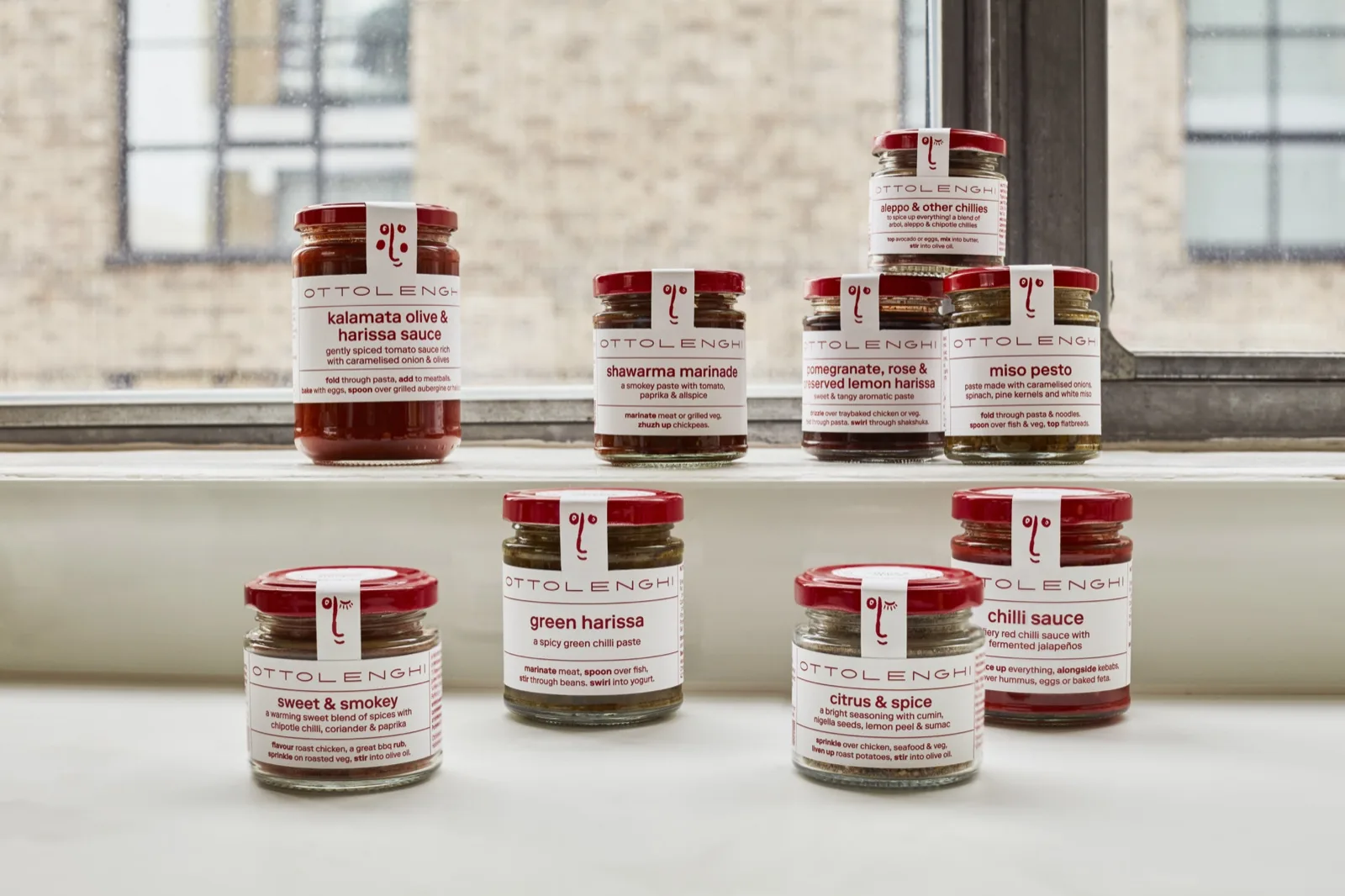
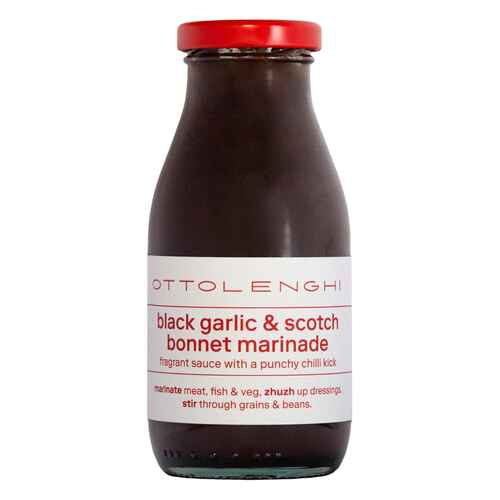
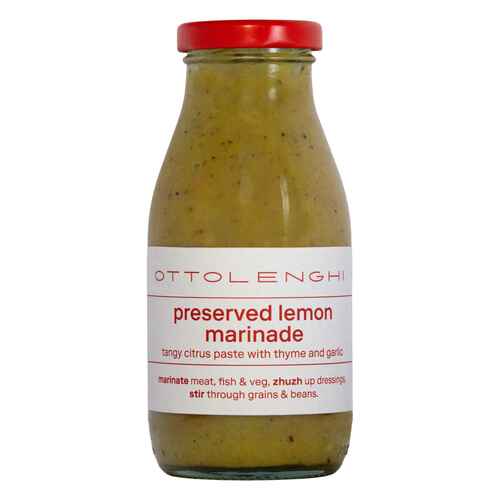
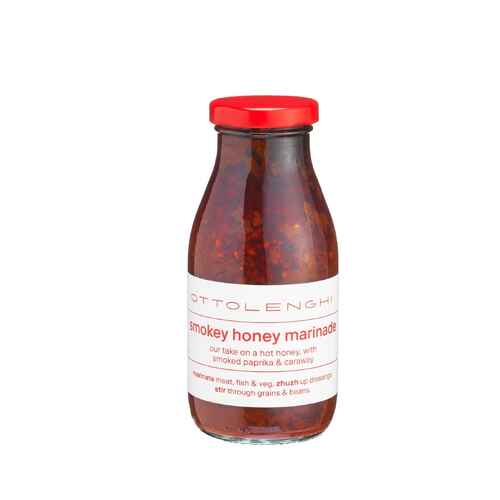
Five marinades share the shelf and they barely overlap. This is the citrus one. Smokey Honey is built on caraway, chipotle and smoked paprika, for roast chicken, root vegetables and halloumi. Black Garlic and Scotch Bonnet puts fermented garlic in front of a real chilli kick, for aubergine and chicken thighs. Preserved Lemon is the salty, sour, herb led jar, closest to the yuzu one but without the ginger. The big jars are all $22.95, so the choice is about what you cook.
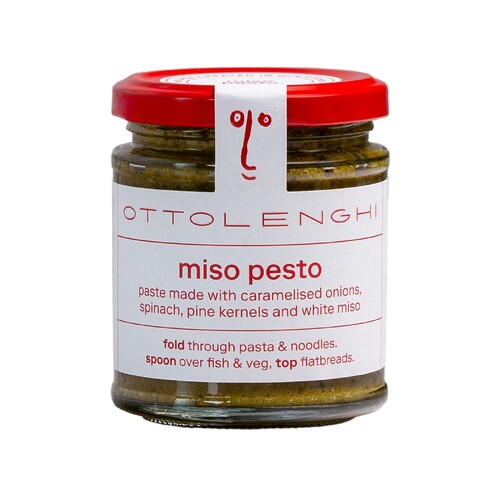
If that is not the dinner you had in mind, the same shelf holds Ottolenghi Miso Pesto at $12.95, the gentler way into miso and no heat required. We have ten ways with miso pesto written up, and the rest of the jars sit under sauces and mixes and across the Ottolenghi range.
Questions we get asked
What is yuzu?
A Japanese citrus fruit, knobbly and yellow-green, roughly the size of a mandarin. It smells like mandarin, grapefruit and lime at once, and reads as aromatic before sour. There is very little juice in each fruit, so zest and juice are treated as seasoning rather than as a drink. Fresh yuzu barely reaches Australian greengrocers, which is why most of us meet it in a jar.
How long do you marinate salmon in miso marinade?
Thirty minutes to two hours, and an hour suits a thick fillet. Miso is salty enough to cure the surface, so leaving salmon in it overnight firms the flesh and pushes the seasoning past pleasant. Traditional saikyo style miso cured fish is a different technique, a much thicker paste that gets wiped off before cooking. With a jarred marinade, brush and bake.
Can you use the yuzu, ginger and miso marinade as a dressing?
Yes, one of its better uses. Whisk two tablespoons with one tablespoon of neutral oil, the juice of half a lime and a splash of water until it pours. Put it on slaw, cucumber, cold noodles or steamed greens. It is already salted, so taste before adding more. It keeps in the fridge for about a week.
Where to start
Start with salmon on a Tuesday and the beans on the weekend. By the second jar you will be thinning it into dressing without measuring. Australian Christmas lunch runs on prawns and cold salmon as much as on anything roasted, which is the season this jar was built for, and our Christmas hampers cover the same table if you are shopping for someone else.
Ottolenghi Yuzu, Ginger and Miso Marinade is $22.95 for 270g. Orders placed before 12pm on a weekday are dispatched the same day from Victoria, and shipping is free Australia-wide on orders over $100.
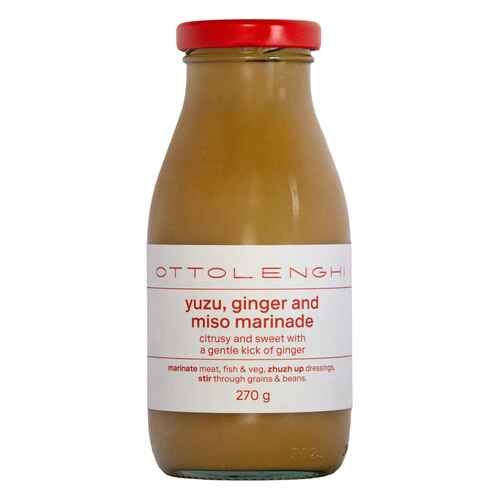
Ottolenghi Yuzu, Ginger and Miso Marinade (270g)
$22.95
Hand-packed and dispatched from our Corio, Victoria warehouse, with free delivery Australia-wide on orders over $100.
$12.95
More from the blog.

The Foodies Hamper: Eight Items, and What a Cook Does With Each
Eight packets, six of them sweet, and not a jar of anything in sight. What is actually in the box, and what somebody who cooks can do with each item once the ri
Read now
The Sweet Treats Hamper: The Kids-and-Grandparents Pick
Eight sweet packets that open by hand and sit on a table at room temperature, which is why this box works when a six-year-old and a grandparent have to be pleas
Read now
Just Add Cheese: Which Cheeses to Buy for the Hamper
Nine pantry items arrive and the cheese is yours to buy. Three cheeses, about 600g between them, and the box itself tells you which ones to ask for at the count
Read now