
What Turkish Delight Is Made Of, and How to Spot the Real Thing
By Andrew Richards, Managing Director at The Gourmet Pantry.
Turkish delight is made of sugar, water, starch, a little acid and rosewater, and almost nothing else. Starch is what sets it. Gelatine is what the imitation uses, and that one swap is the difference between real lokum and a rose jelly wearing the same name.
The four traditional rose lines we range, $4.50 to $13.95, sit together on the Real Turkish Delight range page, and they are the boxes the tells below are described against.
What Turkish delight is made of
Taken slowly, the recipe is sugar, water, starch, a little acid so the sugar does not crystallise, and rosewater at the end. The syrup is cooked low and slow for hours, until it goes from cloudy to translucent, then it is poured into a tray and left overnight. The next morning it is cut into cubes and rolled in icing sugar so the pieces do not weld back together. Nothing else happens to it.
The imitation is a gelatine jelly with rose flavouring, cut to the same cube and dusted the same way. It is not a scandal, it is a different sweet wearing the same name, and you can tell them apart with your teeth. Starch-set lokum is soft the whole way through: it yields, then it gives up. A gelatine sweet resists, springs back and behaves like a jelly snake.
Flavour behaves differently too. Rosewater in a starch-set sweet arrives late and reads as perfume more than taste, which is why people who say they hate rose usually mean they hate rose lollies. Colour is the third tell: real rose lokum is a dull pale pink you can almost see through, not scarlet.
The last tell is on the shelf. Lokum does not go off so much as dry out, going leathery at the edges while the middle stays soft. If the icing sugar has gone damp and the cubes have fused into a slab, that box has sat somewhere warm. Keep it boxed, in a cupboard, at room temperature.
We range one brand of it, all four lines rose, the flavour the tradition is built on. They sit with the rest of our confectionery, so a box can travel with biscuits or a jar of something rather than alone.
The four lines, and which one to buy
One flavour, packed four ways. What actually changes between them is the coating, the size, and how much of the work of looking like a present the box does for you.
| Line | Size and price | What it is | Best for |
|---|---|---|---|
| Rose 250g Chest | 250g, $12.95 | Around 12 pieces of icing-sugar-dusted rose lokum in a chest-style box | Sending on its own as the whole gift |
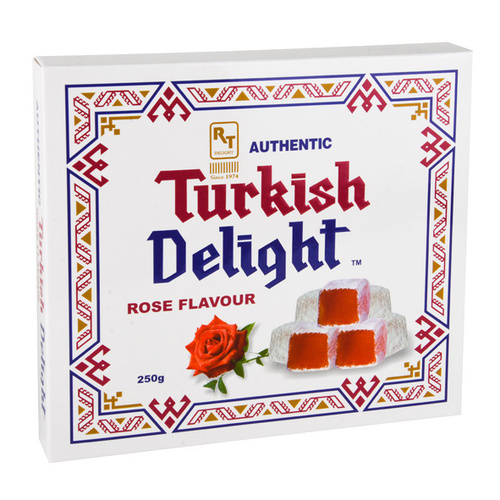
| Square Box, Rose | 200g, $12.95 | The same dusted rose lokum in a flat square box | Opening at the table after lunch |
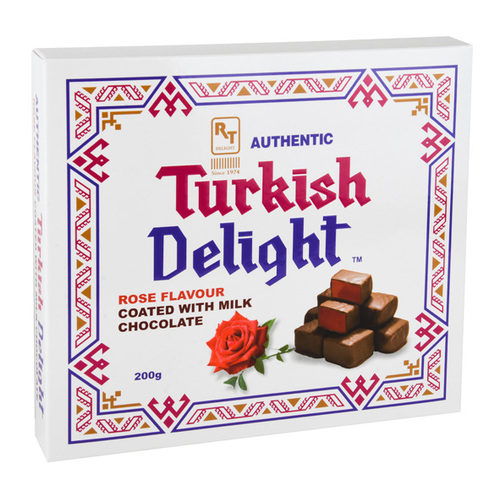
| Square Box, Chocolate Rose | 200g, $13.95 | Rose lokum in milk chocolate instead of icing sugar | Anyone who finds plain lokum too perfumed |
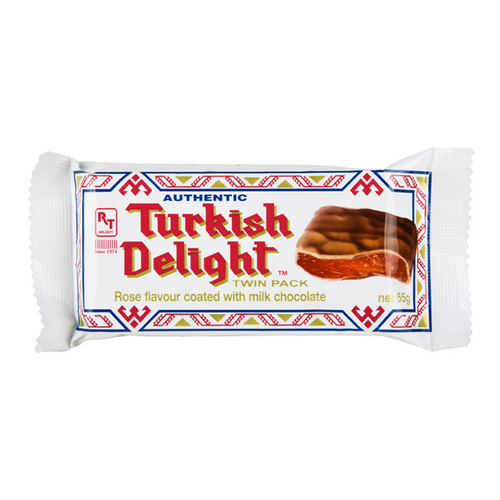
| Chocolate Coated Twin Pack | 55g, $4.50 | A twin pack of chocolate-coated rose lokum | Stockings, Kris Kringle, trying it before you commit |
Choose the coating before the size
The coating changes the sweet far more than the weight does. Icing sugar leaves the lokum exposed, so what you taste is the rose and the texture, and that is the version to judge one on. Milk chocolate covers both. It makes a softer, easier sweet that a room finishes faster, and it is the one to buy for somebody who has told you they do not like Turkish delight.
Then there is the weather, which matters here more than it does in Istanbul. A dusted box will sit out through a hot afternoon and still look like what it is. A chocolate-coated one will not: chocolate blooms grey and goes soft long before the lokum inside minds the heat. If the parcel is headed somewhere warm in December, send the dusted version and keep the chocolate for June.
The $4.50 twin pack is the useful oddity: the cheapest way to find out whether somebody likes lokum before committing to a chest, and a stocking filler that sits well under a $30 Kris Kringle cap.
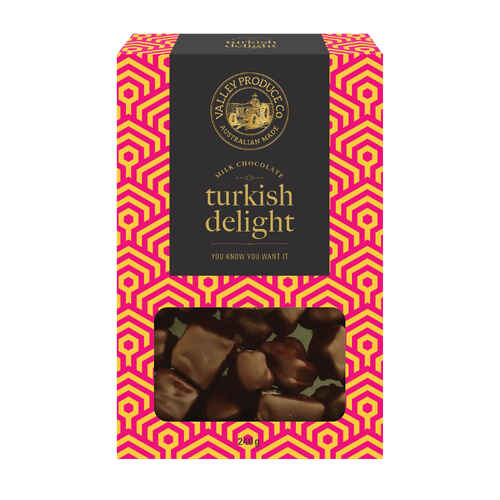
One more Turkish delight sits on the site outside this range. VPC Milk Chocolate Turkish Delight is 200g for $14.95, soft lokum inside milk chocolate, chocolate-first in a way the dusted boxes are not. Buy it for the person who likes chocolate and tolerates rose. Buy the chest for the person who likes rose and tolerates chocolate.
Know what we have brought in.
Christmas ordering reminders and new arrivals, one email when it matters. Unsubscribe any time.
Where it belongs on a Christmas table
Turkish delight is an end-of-the-meal sweet, not a bowl to graze from all afternoon. Bring it out with the coffee, two cubes a person on a small plate. It needs something bitter or salty beside it: a short black, a strong black tea, or a dish of salted nuts. Alone after a big lunch it reads as too much sugar. Next to an espresso it reads as exactly enough.
It earns a place in a gift box for unglamorous reasons. Nothing leaks, nothing needs the fridge, and a flat square box fills the gap that otherwise lets everything rattle. Our Christmas hampers are hand-packed in Corio and closed to a fixed list, so a box of lokum on the same order travels beside the hamper rather than inside it. Build the box yourself and lokum belongs on the top layer, where nothing can press it out of shape.
If it is the old-fashioned part you are after rather than rose in particular, Sovereign Hill raspberry drops are the other traditional sweet we post, boiled by hand in Ballarat. If it is the chew you want, and there are people at the table who avoid gelatine, Candy Kittens do that job instead.
Common questions about Turkish delight
What is the best Turkish delight in Australia?
The honest answer is that best splits by coating rather than by brand. Rose lokum dusted in icing sugar is the traditional benchmark, and chocolate-coated Turkish delight is a different sweet that happens to share the name. We stock rose in both. If you have never had the real thing, start with the dusted version, because chocolate hides the very thing you are trying to taste.
What is real Turkish delight made of?
Sugar, water, starch, a little acid, rosewater, and time. The syrup is cooked slowly until it turns translucent, poured into a tray, left overnight to set, then cut and rolled in icing sugar. Rose is the classic scent. Anything that springs back when you bite it has been set with gelatine instead, which makes it a rose jelly rather than lokum. The box carries the full ingredient list.
Is Turkish delight gluten free?
Traditional lokum is thickened with starch rather than wheat flour, so a lot of it is, but the starch used varies between makers and we do not range these boxes as gluten free. Please do not assume it. If you are buying for somebody coeliac, read the ingredient panel on the box itself rather than any summary, including this one, and shop our gluten free range where the claim sits on the product.
How should you store Turkish delight, and how long does it keep?
In its box, in a cupboard, at room temperature, and the date on the box is the figure to trust. Lokum does not spoil so much as dry out, going leathery at the edges while the middle stays soft. Warmth is what does the damage: if the icing sugar has gone damp and the cubes have fused into a slab, that box has sat somewhere hot. If a parcel is headed north in December, the icing sugar chest travels better than anything chocolate coated. Weekday orders placed before 12pm are dispatched the same day from our warehouse in Corio, Victoria.
Start with the Real Turkish Delight range, choose the coating before the size, and send the icing sugar chest if the parcel is headed anywhere warm.
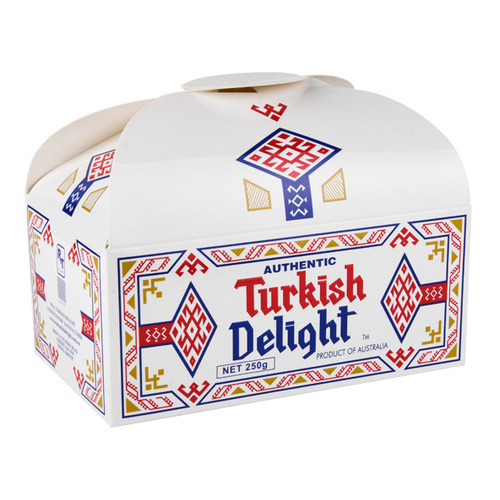
Real Turkish Delight Rose 250gm Chest
$12.95
Hand-packed and dispatched from our Corio, Victoria warehouse, with free delivery Australia-wide on orders over $100.
More from the blog.
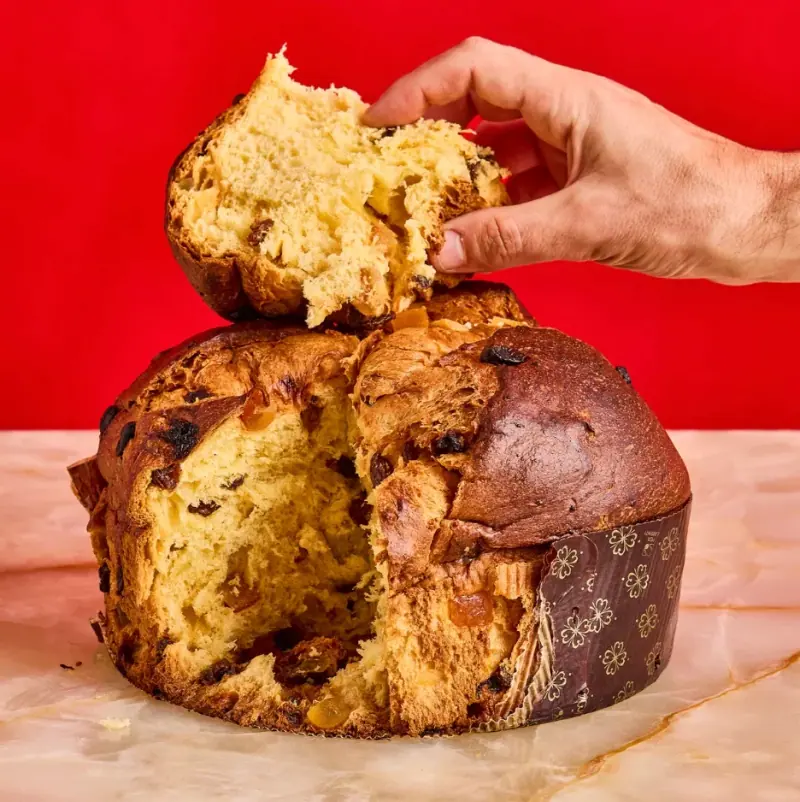
What Is Panettone?
A tall, domed Italian Christmas bread made over three days with a living sourdough starter. Here is what separates a good panettone from a cheap one.
Read now
Gluten-Free Panettone in Australia
Gluten-free panettone is one of the hardest things in baking to get right. Here is why, what separates a good one from a dry one, and how to serve it.
Read now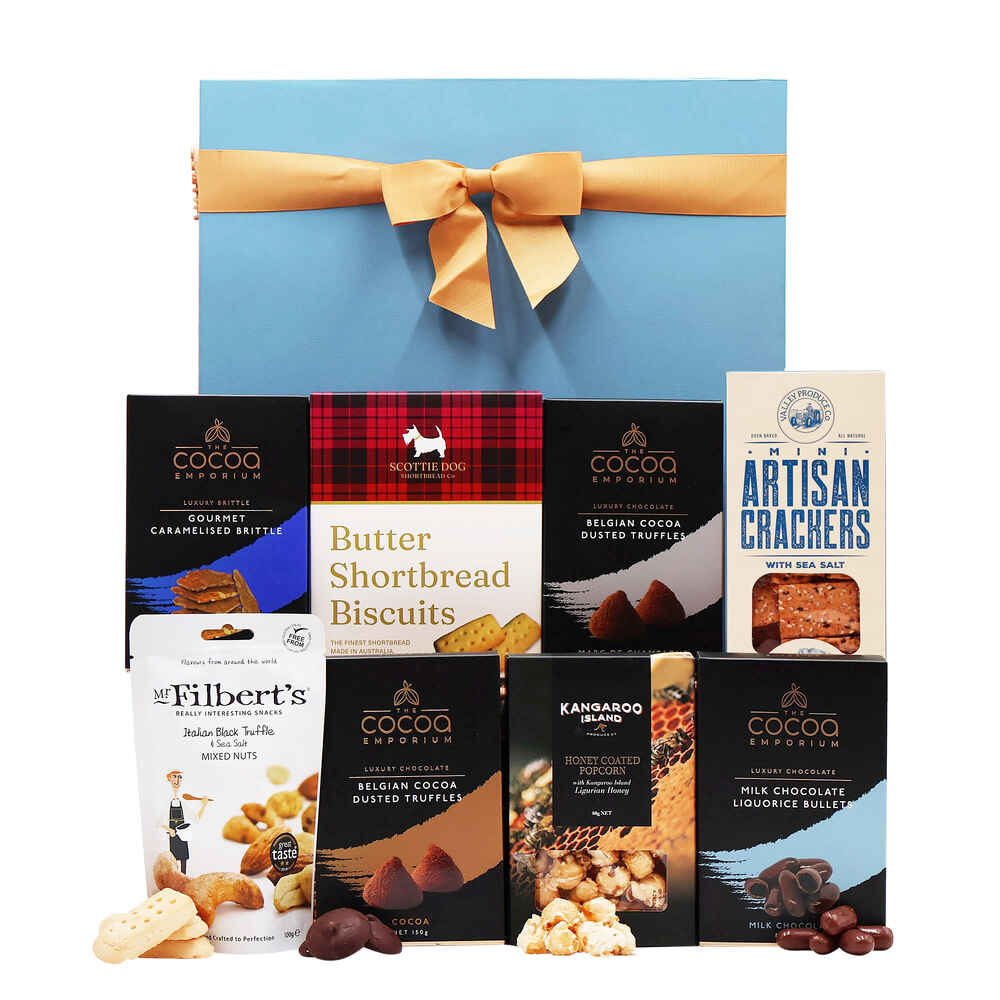
The Foodies Hamper: Eight Items, and What a Cook Does With Each
Eight packets, six of them sweet, and not a jar of anything in sight. What is actually in the box, and what somebody who cooks can do with each item once the ri
Read now