
Quince, Fig or Pear: Choosing the Fruit Paste for Your Cheese Board
By Emily Patrikakos, Brand Executive at The Gourmet Pantry.
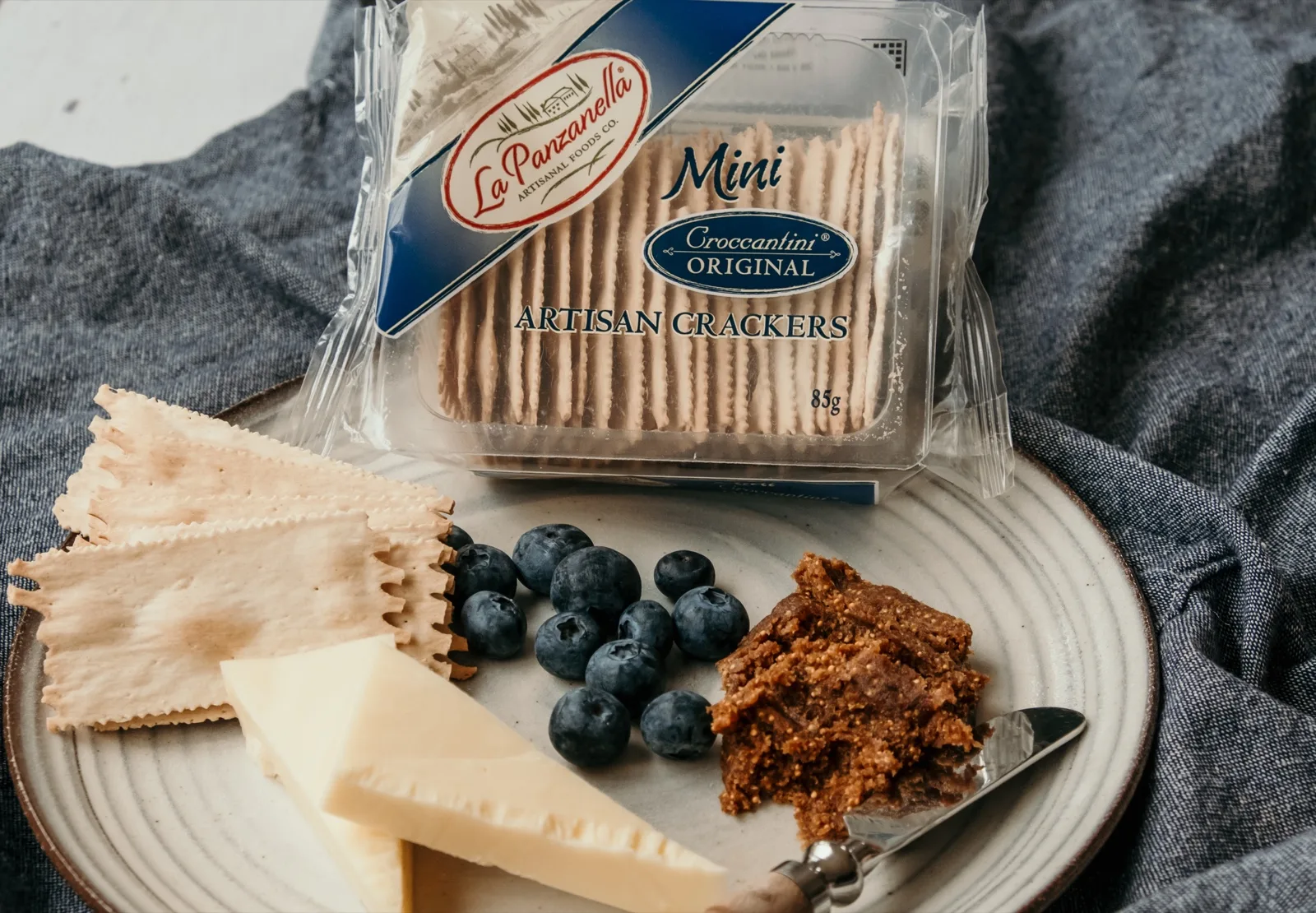
Quince is the default for a reason: it is firm, tart and holds its own against sharp cheddar and manchego. Fig is sweeter and darker, so it takes on blue and washed rind. Pear is the gentlest, and the one to use with soft white cheese. Match the paste to the strongest cheese on the board.
Match the paste to the loudest cheese
A cheese board almost always has one cheese doing the shouting. Pick your fruit paste for that one and the rest of the board sorts itself out. Sweetness is a counterweight to salt and funk, which is why fig works on blue. Acidity is a counterweight to fat, which is why quince cuts through an aged cheddar. Choose for the middle of the board instead and you end up with a paste that does nothing in particular.
Two things matter more than the label. The first is temperature. Fruit paste straight from the fridge is rubbery and tastes of very little, so give it half an hour on the bench before anyone arrives. The second is how you cut it. A good paste is firm enough to slice, so run a hot dry knife through it and lay out batons or small triangles. People take a piece and move on. Left as a whole wedge, it gets mauled with a cheese knife and looks wrecked within ten minutes.
The nut is the part people miss
All three Valley Produce Company fruit pyramids carry a roasted nut through the paste, and the nut shifts the pairing at least as much as the fruit does. That is the part the front of the box does not explain.
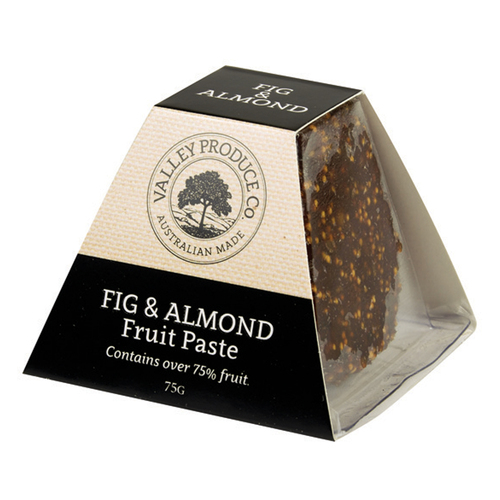
Fig and almond. Black mission figs, caramelised and cooked down slowly until the flavour turns rich and sweet, with freshly roasted crushed almonds worked through for texture. Almond is the quietest of the three nuts, so the fig stays in charge and the result is dark and jammy, closer to a date than to jam. Send the fig and almond pyramid at blue cheese, washed rind and aged goat. It is the one our packers reach for most often, and unlike most of what we range in December, it sells steadily right through the year.
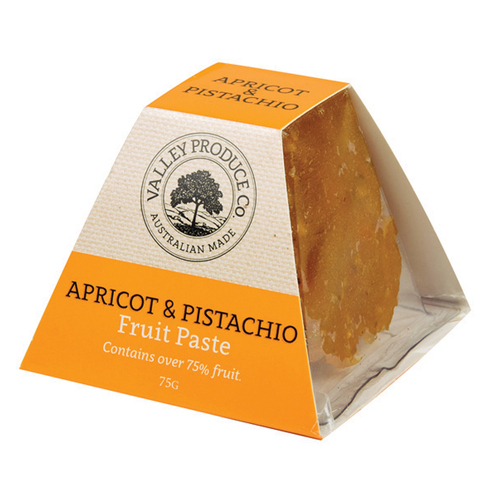
Apricot and pistachio. Three ripened apricots go into each pyramid, pureed and cooked down in small batches, with freshly roasted crushed pistachio kernels added for texture and colour. Apricot hands back the acidity that fig gives away, and pistachio is greener and faintly resinous, so the apricot and pistachio pyramid is the one for hard sheep's milk cheese, manchego and anything smoked.
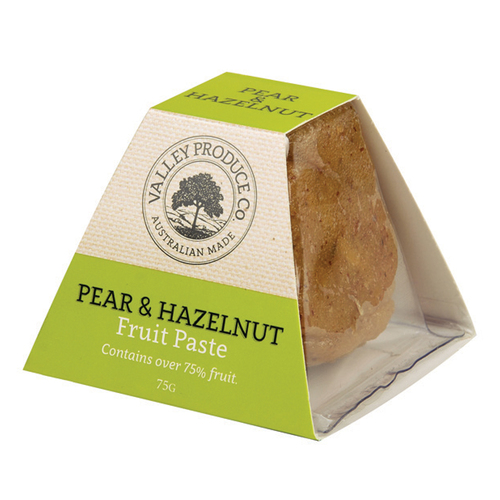
Pear and hazelnut. Fresh William pears from local growers, peeled, cored, pureed and cooked in small batches, with roasted chopped hazelnuts for body. This is the most delicate of the three and the easiest to lose under a strong cheese, so keep the pear and hazelnut pyramid for brie, camembert, triple cream and fresh curd, where fig would simply sit on top and bury them.
All three are 75g and $6.95, which makes buying two of them a much smaller decision than buying a second cheese.
Which paste with which cheese
| Fruit paste | What is in it | Put it next to | Skip it with |
|---|---|---|---|
| Fig and almond | Caramelised black mission figs, roasted crushed almonds | Blue, washed rind, aged goat, salty hard cheese | Fresh delicate cheeses, which it flattens |
| Apricot and pistachio | Pureed ripened apricots, roasted crushed pistachios | Hard sheep's milk, manchego, smoked cheddar | Boards already carrying a sweet chutney |
| Pear and hazelnut | William pears, roasted chopped hazelnuts | Brie, camembert, triple cream, fresh curd | Strong blue, which walks straight over it |
Two pastes is the sensible ceiling for a board of four cheeses. Three and people stop tasting the difference, which defeats the point of choosing carefully in the first place.
Why there is no quince paste in our range
Quince is the paste most Australians picture, and the tradition behind it is genuine. Dulce de membrillo alongside manchego has been working in Spain for a very long time, and the firm, high-acid set of quince is what makes it hold up against a hard salty cheese. We do not range a plain quince paste, and it is more useful to say so than to steer you at a fig and hope you do not notice.
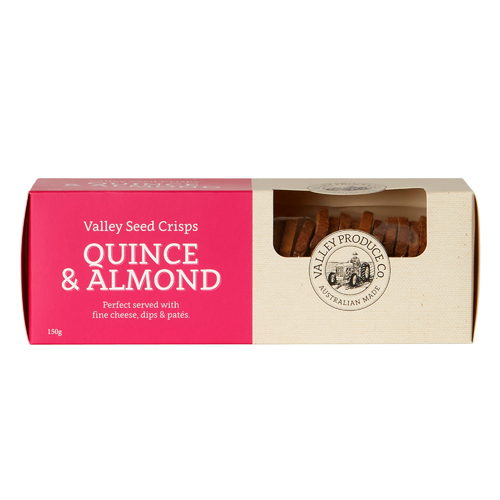
If quince is what you actually want on the table, buy it as the biscuit instead. The Valley Seed Crisps Quince and Almond put the same quince and almond pairing into a seeded crisp, 150g for $6.95, which is a good move when the board already has a chutney or a relish and a second sweet slab would tip the whole thing sugary. Sitting a wedge of manchego on one of those gets you most of the way to the classic pairing without a paste at all. The rest of our cracker range follows the same logic, and if you are still working out what goes under what, which cracker goes with which cheese is the longer version of that argument.
The rest of the board
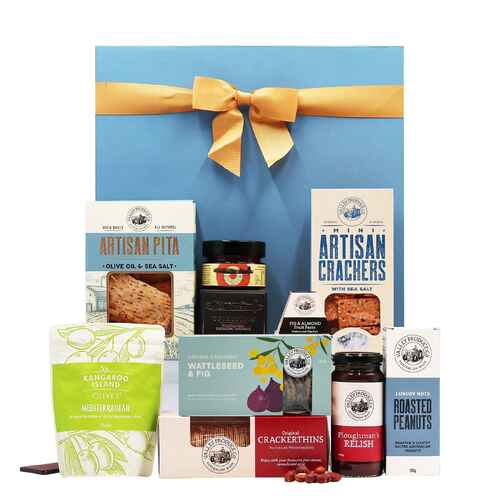
Fruit paste is one of four things a board needs: cheese, something crisp, something sweet and something sharp. Get the sweet slot right and you can be fairly relaxed about the rest. Our guide to building a cheese board walks through the whole spread, and the Just Add Cheese hamper is the shortcut version: everything that sits beside the cheese, boxed, so the only thing left to buy is the cheese itself. We pack those by hand in Corio, just outside Geelong.
Whatever is left over is an ingredient, not a leftover. A thin slice of the fig melted onto roast pork or lamb in the last few minutes of cooking behaves like a glaze, and any of the three diced small will lift a grain salad. Sealed in the fridge, an opened pyramid is good for a fortnight.
Cheese board ideas, before the December rush.
Christmas ordering reminders and new arrivals, one email when it matters. Unsubscribe any time.
Questions we get asked
What cheese goes with quince paste?
Manchego first, then any hard salty cheese: aged cheddar, pecorino, a dry gouda, an aged goat. Quince is firm and tart rather than jammy, so it cuts fat instead of adding sweetness on top of it. That is why it struggles beside a delicate brie, where the acidity reads as sour. If your board leans soft and creamy, a pear paste is the better partner.
How much fruit paste do you need per person?
Allow roughly 15g to 20g a head as part of a mixed board, which makes a 75g pyramid about right for four to six people. Two pastes for eight is comfortable. Fruit paste keeps well sealed in the fridge, so if you are unsure, buy the second one. It will still be good the week after, which is not true of the cheese sitting next to it.
What is the difference between quince paste and membrillo?
None. Membrillo is simply the Spanish word for quince, and dulce de membrillo is the quince paste sold in Australian delis under both names. What does vary is set and sugar: a firm paste you can slice behaves very differently on a board to a soft spoonable one, so buy the sliceable kind if it is going out beside cheese.
Pick the paste for your loudest cheese and buy two rather than one: browse the fruit paste range at $6.95 each, or send the whole idea to someone else's table with our Christmas hampers. Orders placed before 12pm on a weekday are dispatched the same day, and shipping is free Australia-wide on orders over $100.
VPC Fruit Pyramid Fig & Almond 75g
$6.95
Hand-packed and dispatched from our Corio, Victoria warehouse, with free delivery Australia-wide on orders over $100.
$84.95
More from the blog.
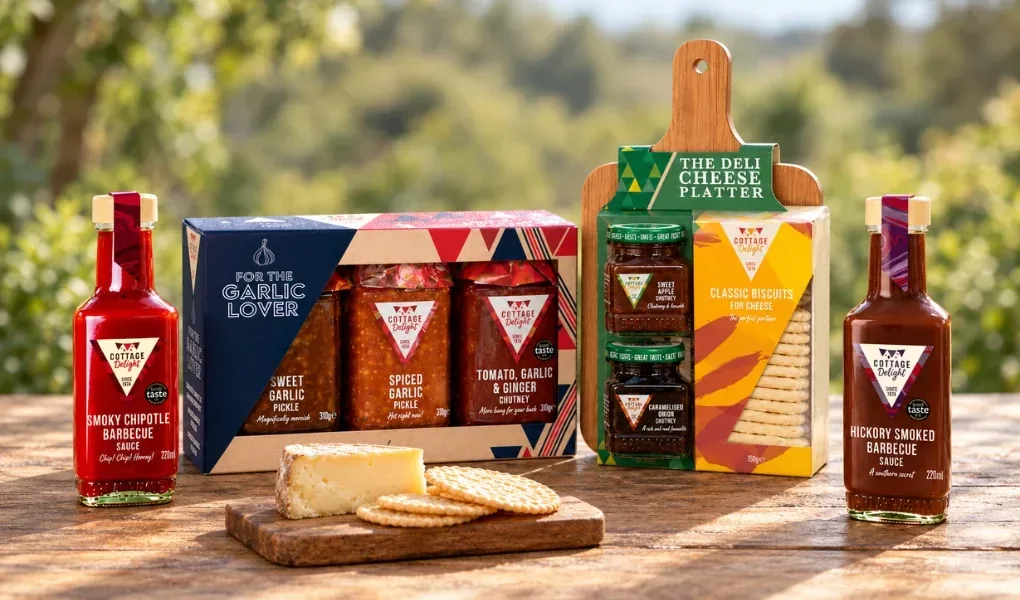
Christmas Gifts for the Dad Who Loves to Eat: 2026 Gift Guide
Seven Cottage Delight gift packs for the dad who loves to eat, from $29.95 stocking fillers to a six-jar Cheese Tree, with what is inside each one.
Read now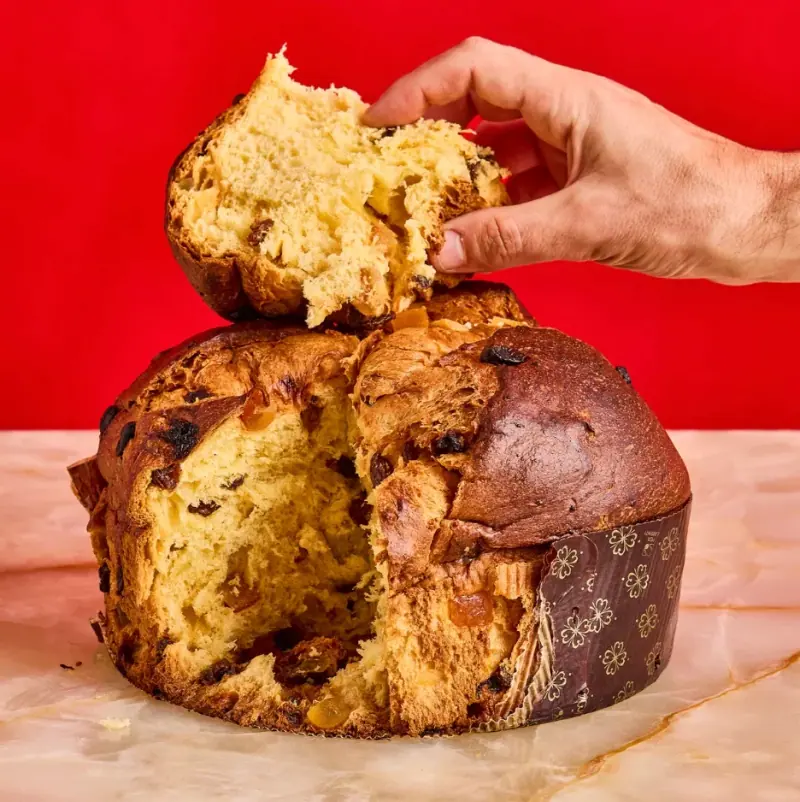
What Is Panettone?
A tall, domed Italian Christmas bread made over three days with a living sourdough starter. Here is what separates a good panettone from a cheap one.
Read now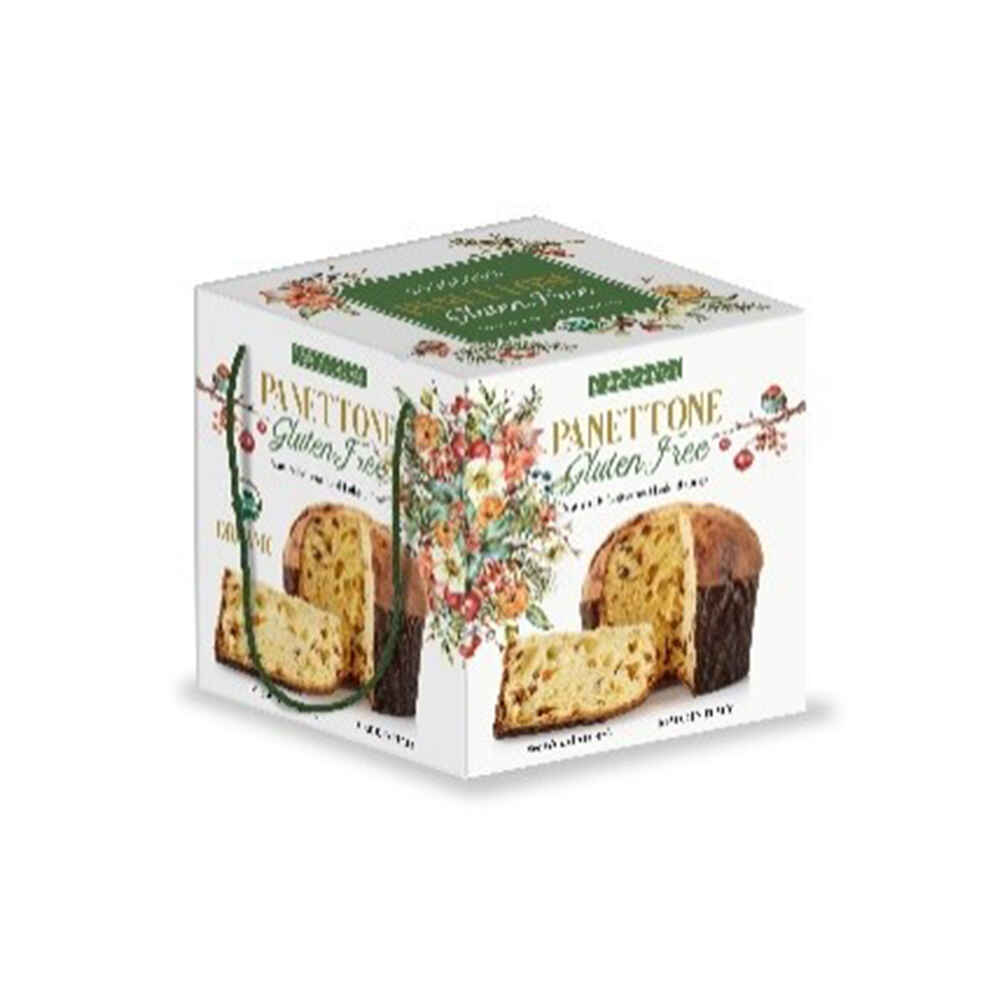
Gluten-Free Panettone in Australia
Gluten-free panettone is one of the hardest things in baking to get right. Here is why, what separates a good one from a dry one, and how to serve it.
Read now